
Understanding leather repair techniques is essential for every individual who has invested in high-end leather goods. If taken care of properly, a real leather item can last decades. Unlike synthetic materials, real leather can develop a natural patina when treated and repaired correctly. This comprehensive guide will go through the different techniques of leather repair that are essential for a serious leather goods admirer.
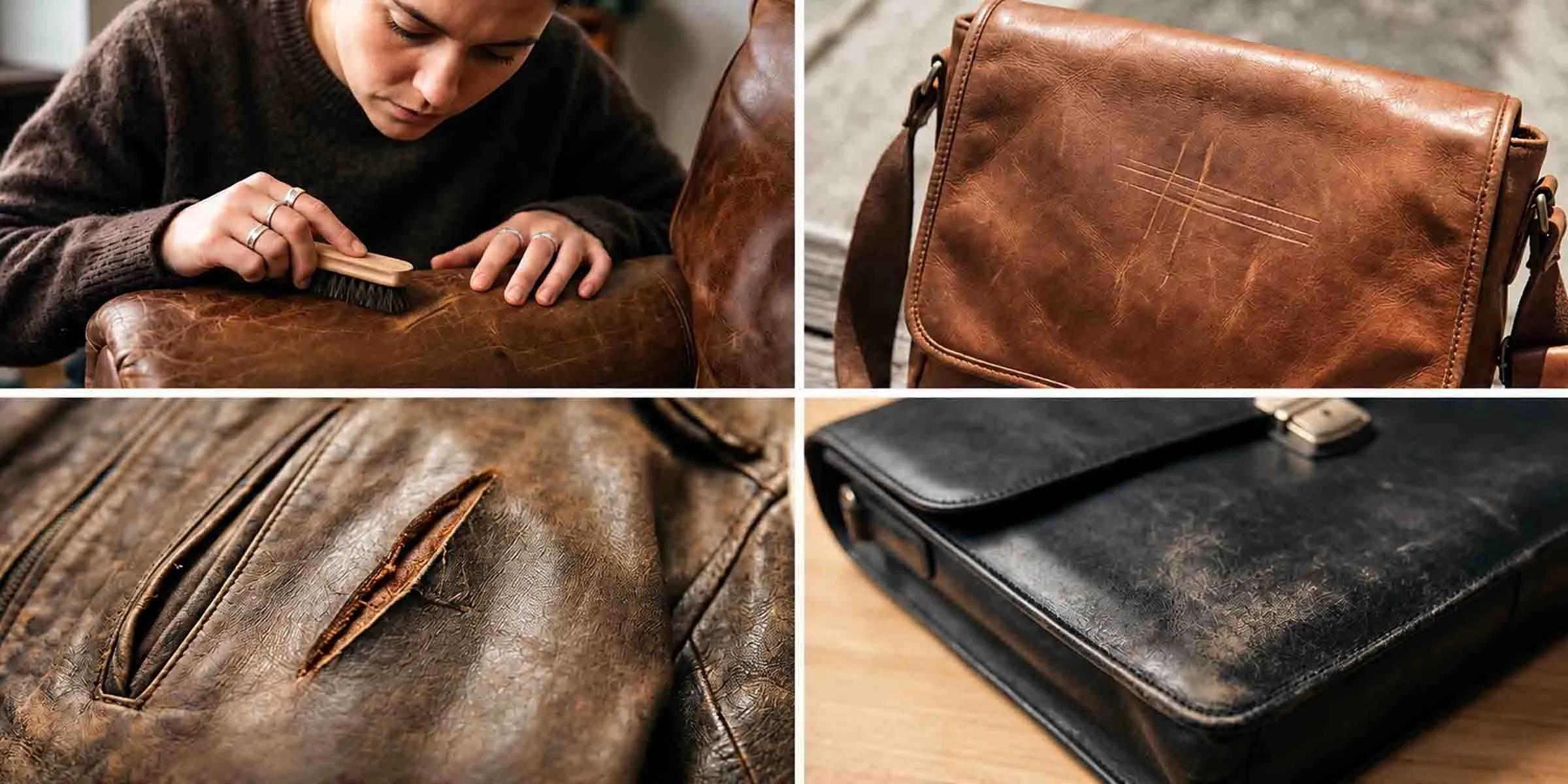
Different types of leather scratches
There are multiple types of leather scratches that can be based on their severity. For you, the first task after you find the mark is to examine it. Without evaluating the scratches, you will not be able to implement the right leather repair method:
Light Surface Scratches:
These scratches are highly common and can be fixed at home easily. To identify light surface scratches, you can see them on your leather bag or any other leather item.
Deep Scratches and Cuts:
Another type of scratch is deep scratches or cuts. These are deep mark which can be seen by noticing the raised edges and visible cuts on the surface. You can also fix these deep scratches and cuts at home, but you may need to seek professional leather repair service if the mark is too deep.
Scuffs and Worn Areas:
Scuffs are the simplest marks you can find on leather jackets or bags. However, worn areas are the spots on the leather surface that are discolored or become thin.
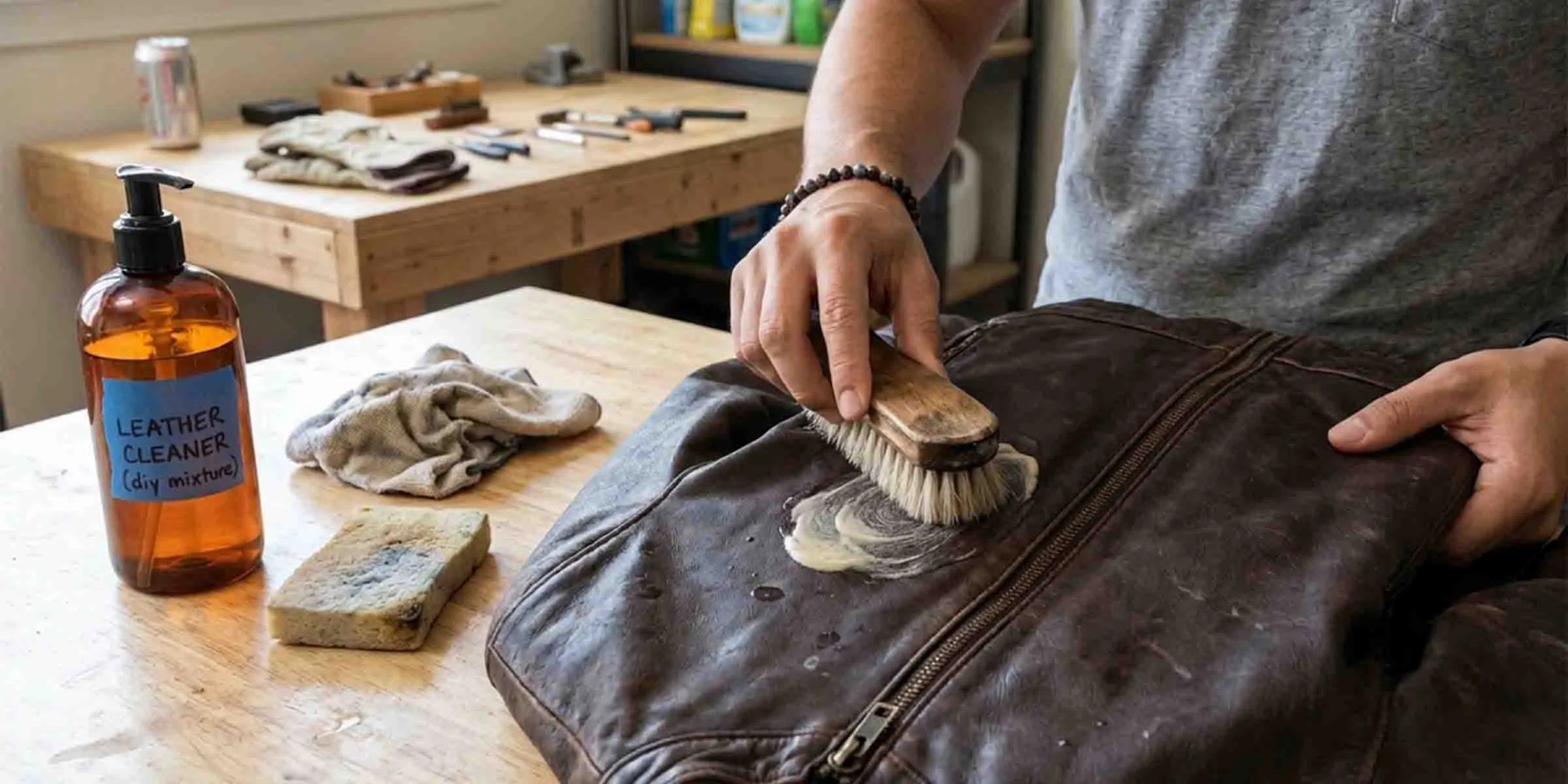
Materials You’ll Need to Fix Leather Scratches
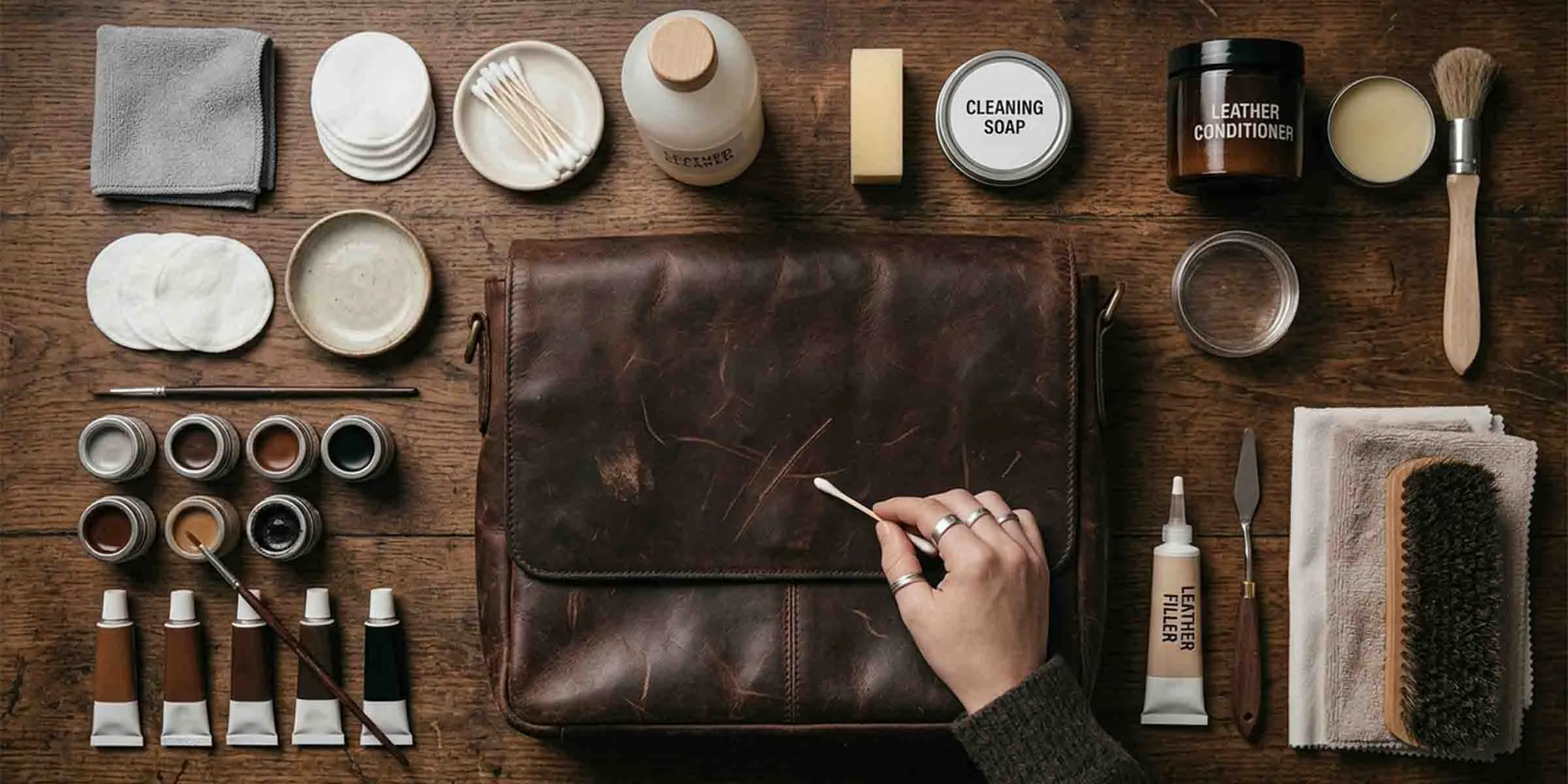
Gathering the right tools to fix leather scratches before starting the process is essential. Having the leather repair supplies ready prevents interruptions. Light surface marks only need simple hydration, but faded areas on your leather purse or jacket require specialized color-matching dye. Whether you need to repair scratches on a leather bag or on a leather jacket, we have curated a list of tools required for care and maintenance of the leather.
- Soft microfiber cloths – for cleaning and buffing
- Leather cleaner (or a mild soap-and-water solution)
- Leather conditioner – restores oils and blends light marks
- Matching leather cream or dye – for color loss
- Leather filler – only for deeper gouges
- Cotton swabs – for precise color work
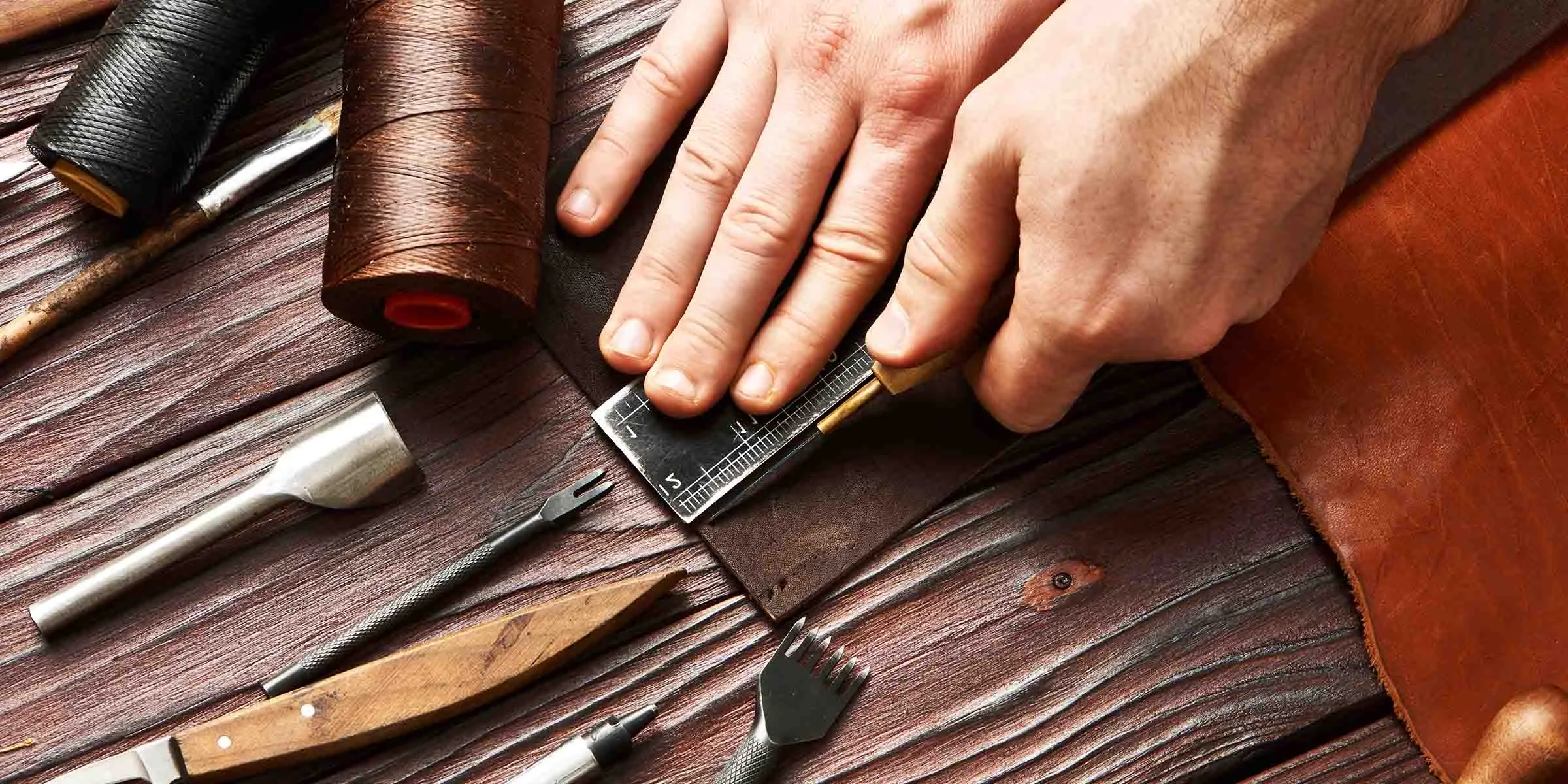
An Easy Guide to Leather Scratch Repair by Scratch Type
At some point, you’ll find a scratch on your leather bag or purse. To keep on wearing your high-end leather masterpiece, below are some easy methods to repair leather scratches.
Light Surface Scratches:
To fix light surface scratches on a leather surface, massage the scratch firmly in a circular motion with your thumb. The body heat from the thumb gets transferred to the leather surface and redistributes the natural oils. Using a microfiber cloth, immediately apply a well-formulated conditioner to hydrate the dry surface.
Deep Scratches and Cuts:
Deep scratches on a leather bag or any other leather good need careful cleaning. The open gaps due to cuts compromise the integrity of the leather item. To fix this, trim away the frayed edges. Using a palette knife or plastic card, fill the cuts with flexible leather filler and leave it to dry. After the affected area dries, sand the area with 1200-grit sand paper till the affected area becomes smooth. Now, using a cotton swab or sponge, complete the repair by dabbing on a matching leather dye. Finally, apply a good-quality topcoat to seal it.
Scuffs and Worn Areas:
To repair leather scuffs, apply leather cleaner using a microfiber cloth and remove the dirt and repair scuffs. To repair worn areas on your leather, clean the affected spot with isopropyl alcohol using a wiping cloth to strip away embedded body oils, grease, or sweat.
A Step-by-Step Master Guide to Fix Leather Scratches
Here is the master guide through which you can learn easy steps to get rid of leather scratches.
Step 1: Clean the Area
Using a soft wiping cloth, soak it in the leather cleaning solution and wipe the area. This is an essential step because spots on leather with dirt, oil, and dust hinder your repair and cleaning process. Also, the dirt will get mixed with the cleaning solution, resulting in repair process failure.
Note: Always test the leather cleaning product first on a small hidden area on the leather and wait for a few minutes. Look for any discoloration to ensure that the leather cleaning solution is perfect to use for the type of leather.
Step 2: Apply Leather Conditioner
Conditioner can help restore flexibility and reduce the appearance of minor surface marks, but it cannot repair deep cuts or missing leather. According to the SCIN leather experts, you can also use DIY leather conditioner, as it is safe and economical for most of the leather scratches. Let the conditioner dry before checking the results.
Step 3: Use Leather Color Repair Balm
To fix scratches on a leather purse, bag, or jacket, after conditioner is using balm. First, choose the balm that matches your leather color. Apply the balm to the leather surface and rub it in circular motions. Blend the balm with the surface until the scratch is no longer visible.
Step 4: Heat Treatment (Optional)
For a few types of leather, you can also use minimal heat to set in the balm. To do this, you can use a hair dryer on low heat. Moving in circles, hold the dryer a few inches away.
Note: Do not overheat the leather; it can damage the surface.
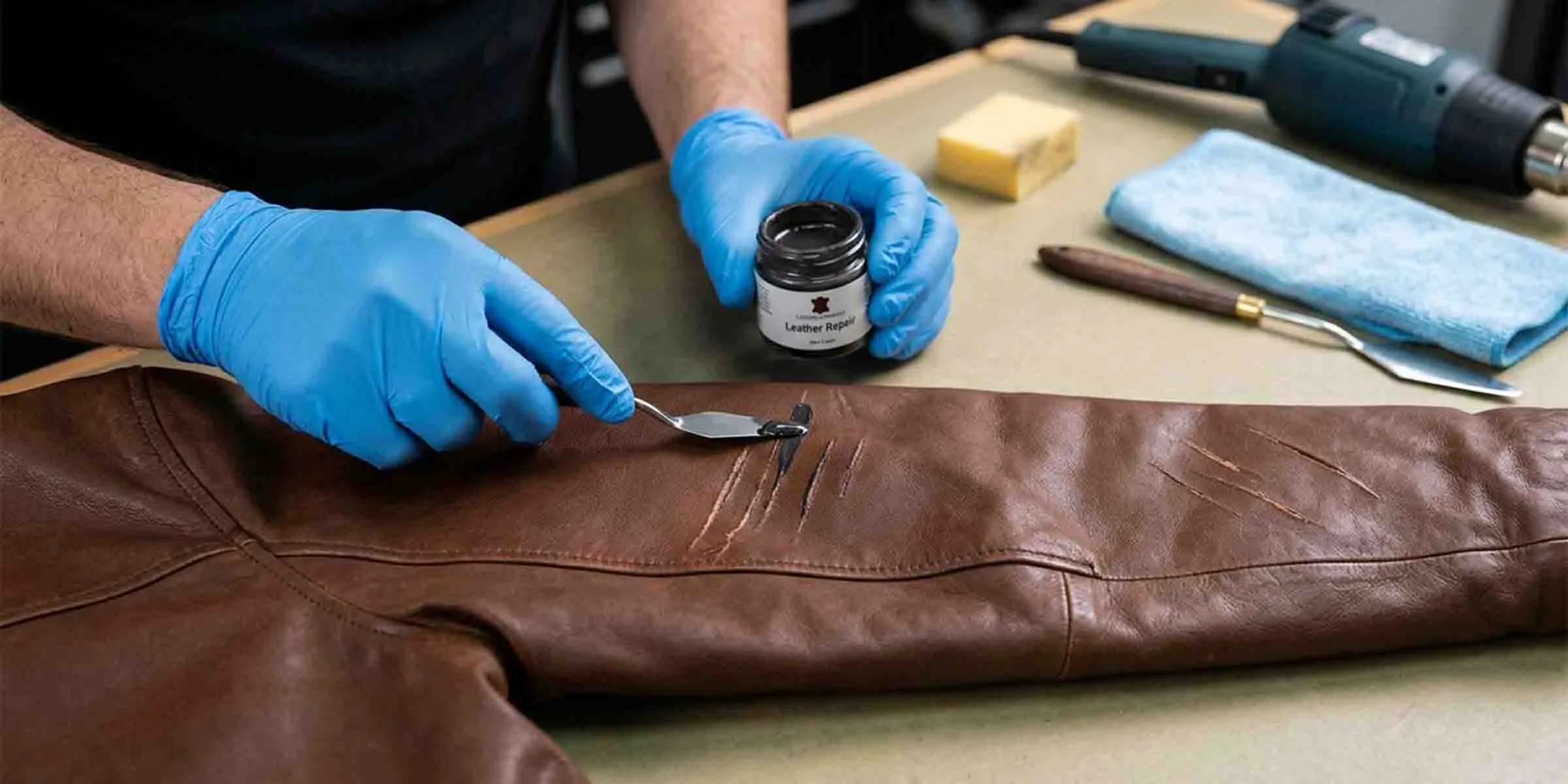
Fix leather scratches on a leather jacket.
For light scratches on a leather jacket, use your thumb and rub over the scratch firmly in a circular motion for 30-60 seconds. This will redistribute the natural oils of the leather surface and flatten the mark. For stubborn scuffs, you can also use a small amount of leather conditioner with a wiping cloth.
Fix leather scratches on leather purse
To repair leather scratches on a leather purse, start with a gentle massage on the surface with a clean finger and blend away the marks. If the marks remain, then dab a small amount of leather cream using a cotton swab. But make sure not to oversaturate the material. After the moisture gets absorbed, use a cloth to buff until the repaired area becomes dry and matches the surrounding area.
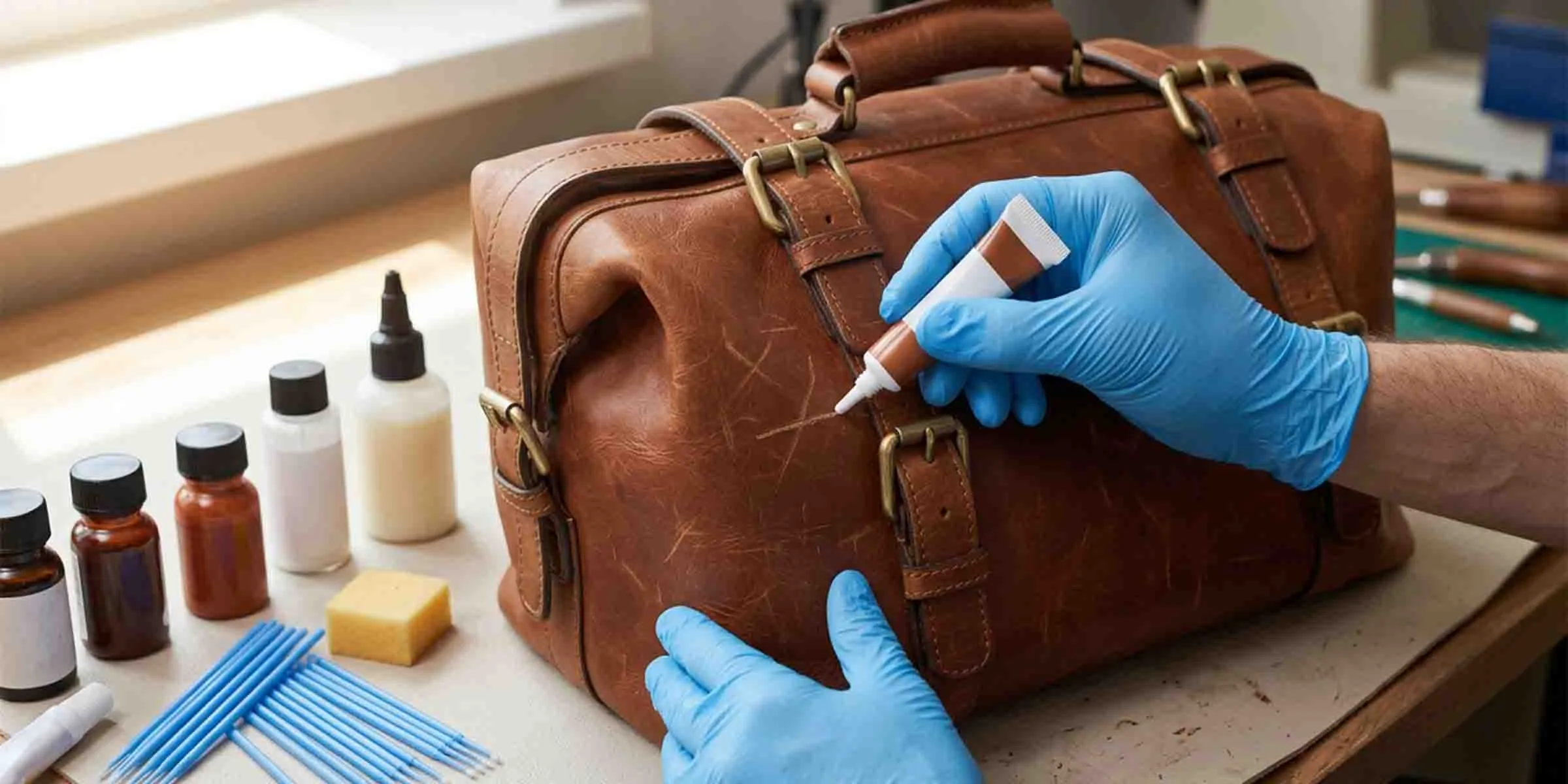
Fix leather scratches on leather bag
For fixing scratches on a leather bag, you can opt for the friction method. Start by rubbing the surface with your hand to redistribute the oil back into the scuffed fibers. If the scratch has also resulted in stripping some color, use the balm of matching color directly on the affected area using a microfiber cloth. After the product dries, buff the surface to wipe off any residue.
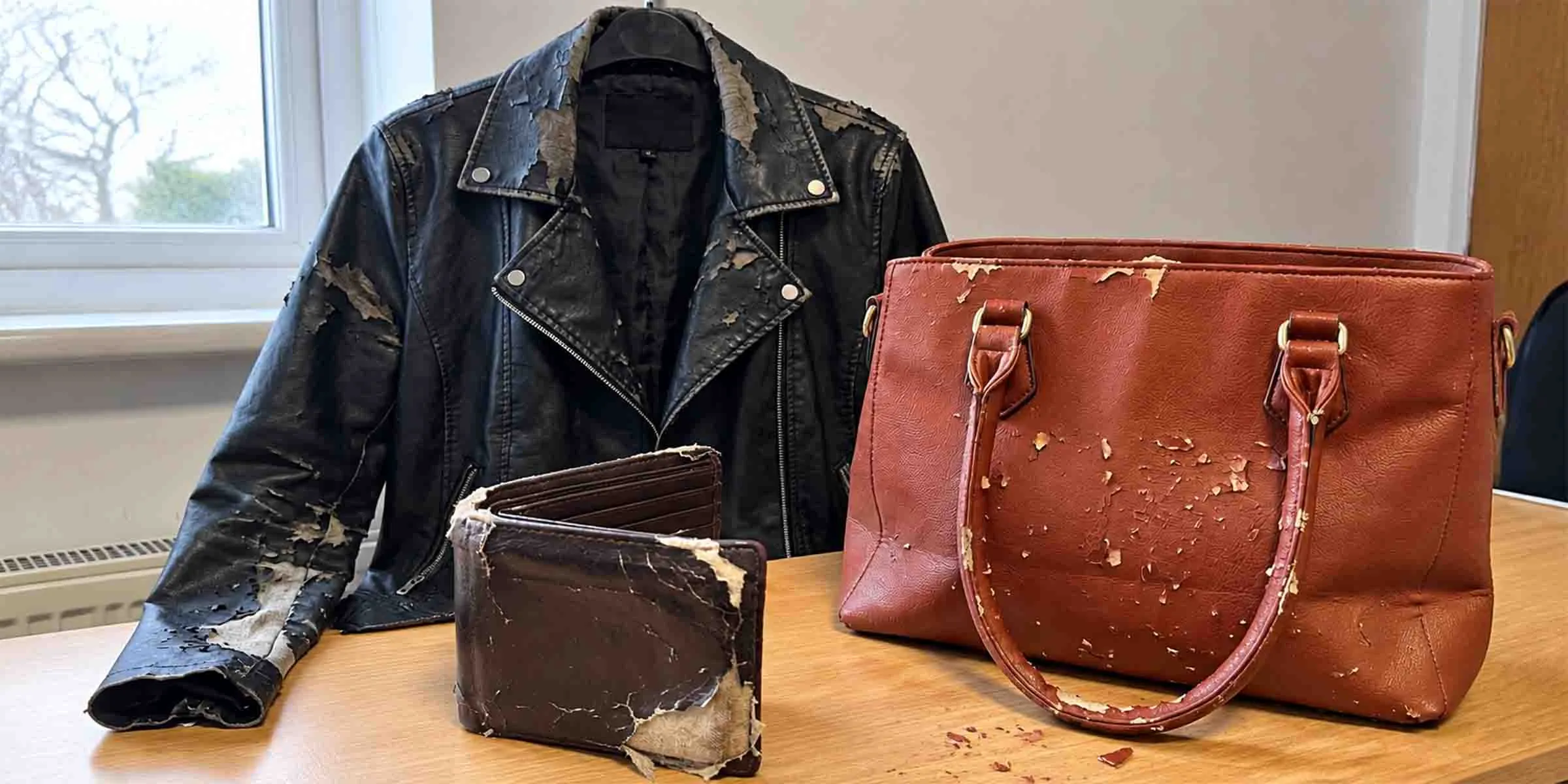
Leather peeling
Leather peeling or flaking is another type of damage that needs care and maintenance. You can identify leather peeling as the leather product’s surface will lift in patches. Many individuals confuse peeling with scuffs, but these are not the same, and their methods of repairing also differ. Whether you bought an amazing timeless men’s leather jacket or a women’s leather jacket, flaking may happen if the leather piece is synthetic.
Real Leather does not peel
High-quality real leather typically does not peel like synthetic leather. However, surface finishes, coatings, and damaged leather layers can still crack, flake, or deteriorate over time.
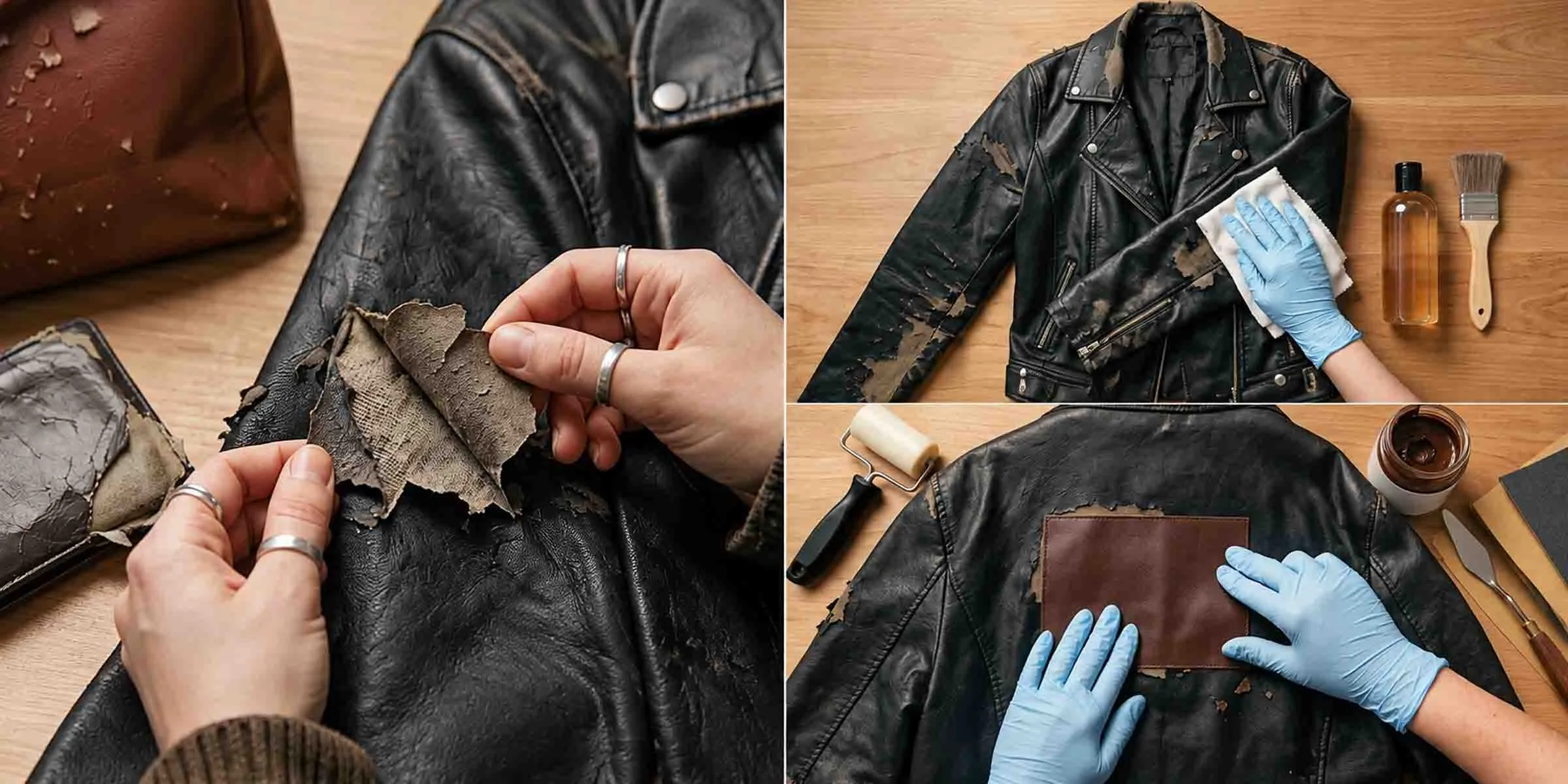
Fix leather jacket peeling
Even if you have a synthetic leather product, do not worry. Follow the steps below to repair the peeling leather jacket easily.
Step 1: Assessing Leather Damage
Assessing the leather damage is a significant step towards repairing peeling leather. This assessment will highlight which method to opt for. Without knowing the amount of damage, the repair method will not give the best results.
Step 2: Cleaning and Preparing the Jacket
Start the cleaning process by removing the dust and dirt from the leather surface. You can carry out this step by using a microfiber cloth or a soft-bristled brush. Identify the type of leather and apply the cleaner. Let the leather jacket completely dry.
Step 3: Repairing Leather Jacket Peeling
To repair minor leather peeling, you can use leather glue or adhesive. You can also apply the leather filler to the peeled section using a fingertip. Blend and let it dry. Once dry, sand the leather surface for seamless results. Additionally, for extensive peeling, you can choose a leather patch. After cleaning and drying, stick the patch on. Smooth out any bubbles or wrinkles and let it dry. Trim the patch if required for a neat finish. If the peeling is too much, you can also look for professional help.
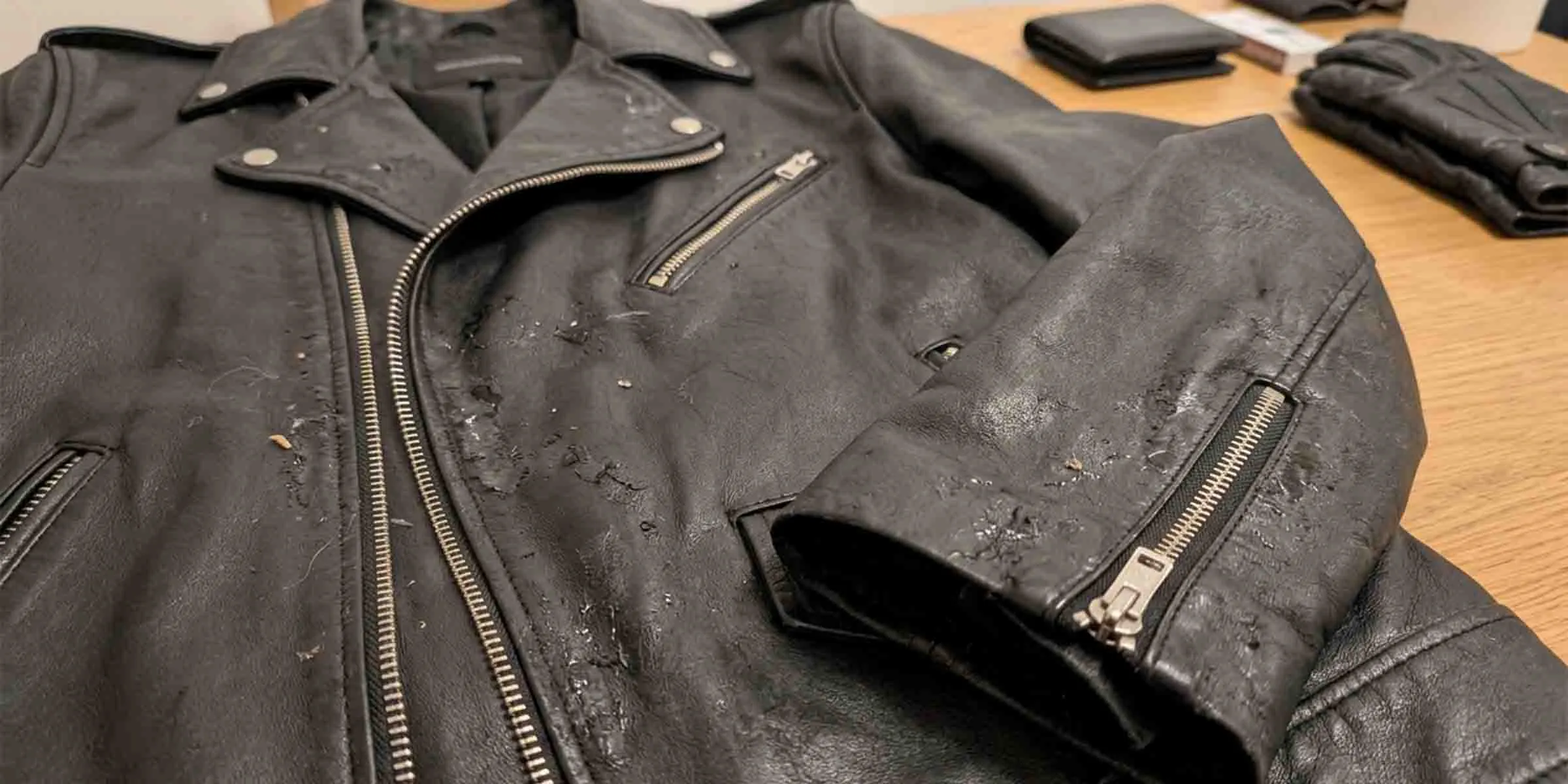
Sticky Leather
Sticky leather is a condition in which synthetic or natural leather develops a tacky, glue-like texture over the surface.
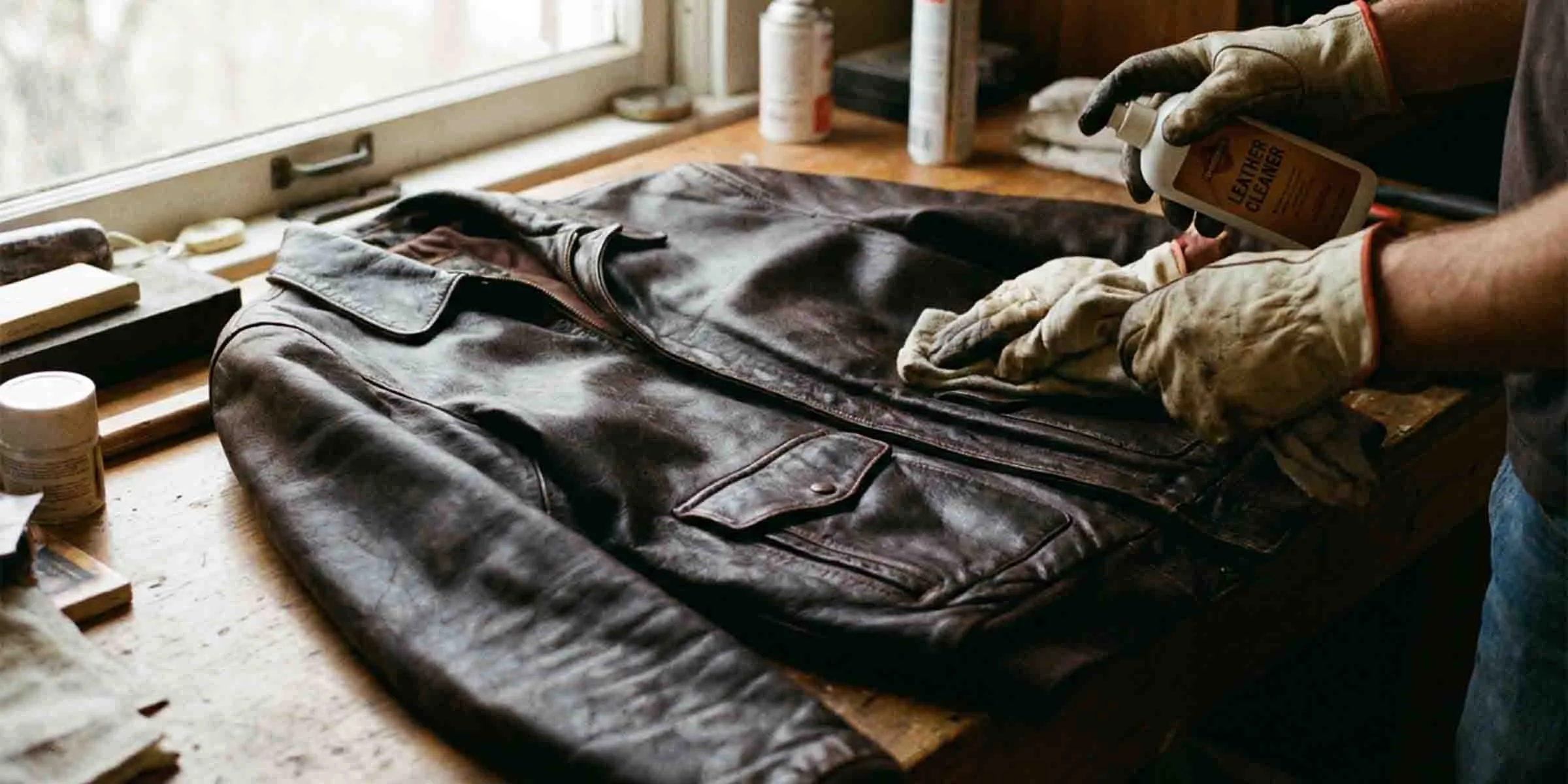
Common Causes of Sticky Leather
The three common and major causes of sticky leather include poor-quality materials. Improper care and accumulated oils on the surface.
Environmental Factors
Two major environmental factors that cause leather to become sticky are:
- High Humidity: Damp and warm air causes leather to absorb moisture and expand. Further, it weakens the protective top finish. This gives a gummy feel to the leather surface.
- Heat and Sunlight: Being left in the car or getting direct exposure to extreme heat, it bakes the leather. The sunlight exposure draws out the natural oils from the leather surface and causes it to seep.
Product and Body Oil Buildup
- Body Oils and Sweat: Naturally, the human body releases body oils, which include sweat and sebum. Upon contact with the leather surface, they ruin the top coat, creating a thick, sticky layer.
- Excess Conditioning: Using more conditioner will not only damage the surface of the leather but also create a sticky layer on the surface.
- Incorrect Cleaners: Body washes, dishwashing liquid or using other harsh chemicals create a thick, sticky layer on the leather jacket or any other leather item.
Material Degradation
- Plasticizer Migration: This factor is common in synthetic leather products, as they are manufactured using plastic raw materials, including PVC and vinyl. Over time, and with use of the leather product, these chemicals separate from the surface and form a sticky layer.
- Polyurethane Breakdown (Hydrolysis): Polyurethane (PU) is used in Faux leather, which, when exposed to water vapor and air, causes a chemical reaction called hydrolysis. Due to this process, the protective layers break down to form flakes, liquefy, and turn into a sticky layer.
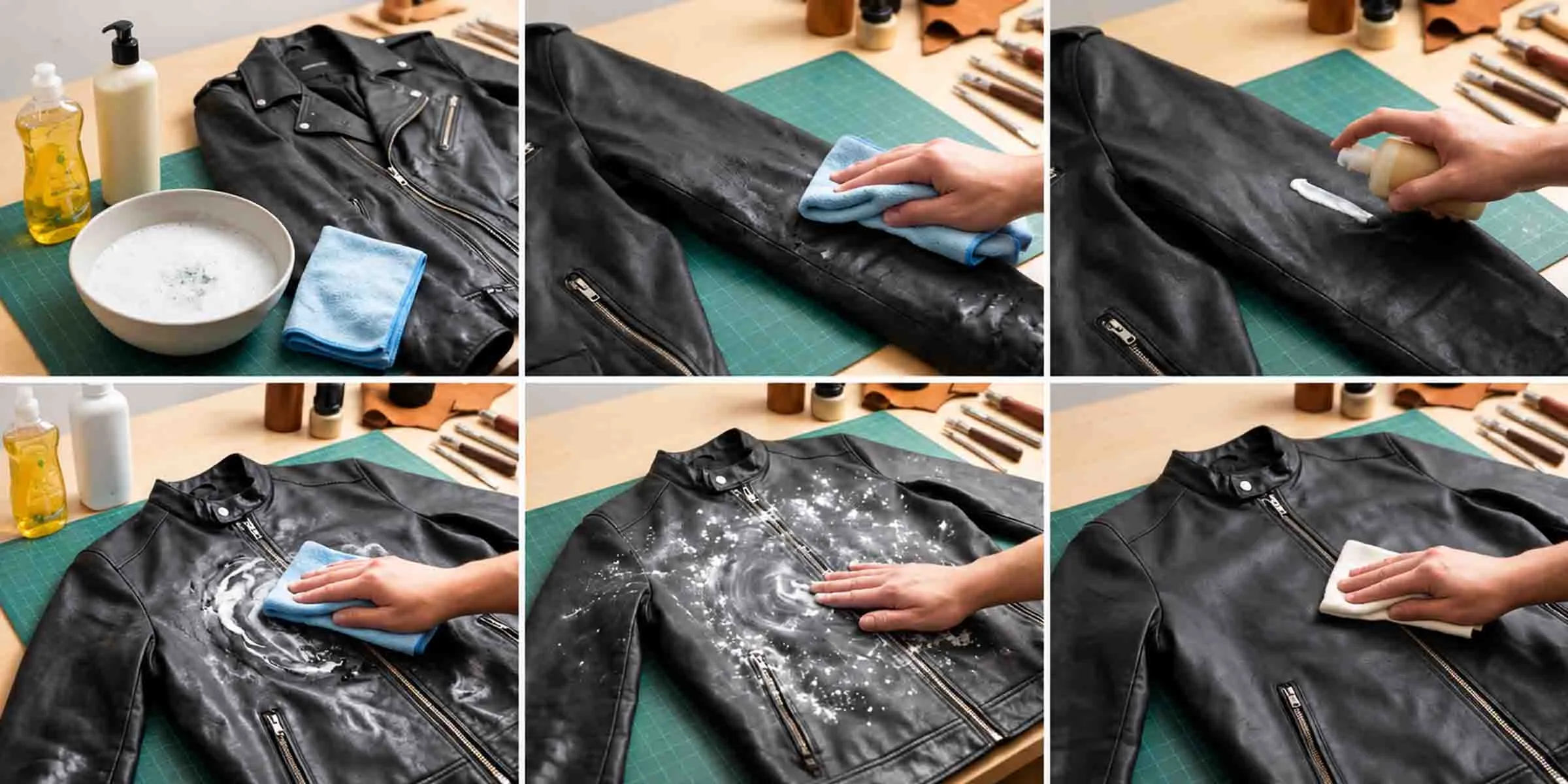
Fix a Sticky Leather Jacket
To fix the sticky leather, follow the steps, which are provided according to the leather type. For fixing a sticky real leather jacket, use mild dishwashing soap and mix it with warm water. Using a microfiber cloth, wipe, rinse, and let it dry. Once dry, apply the conditioner to restore the leather’s condition. To clean the sticky faux leather, use mild soapy water and wipe. Thoroughly dry the leather and massage it with cornstarch or baby powder to absorb the chemical effectively. Finish the repair by buffing the leather surface.
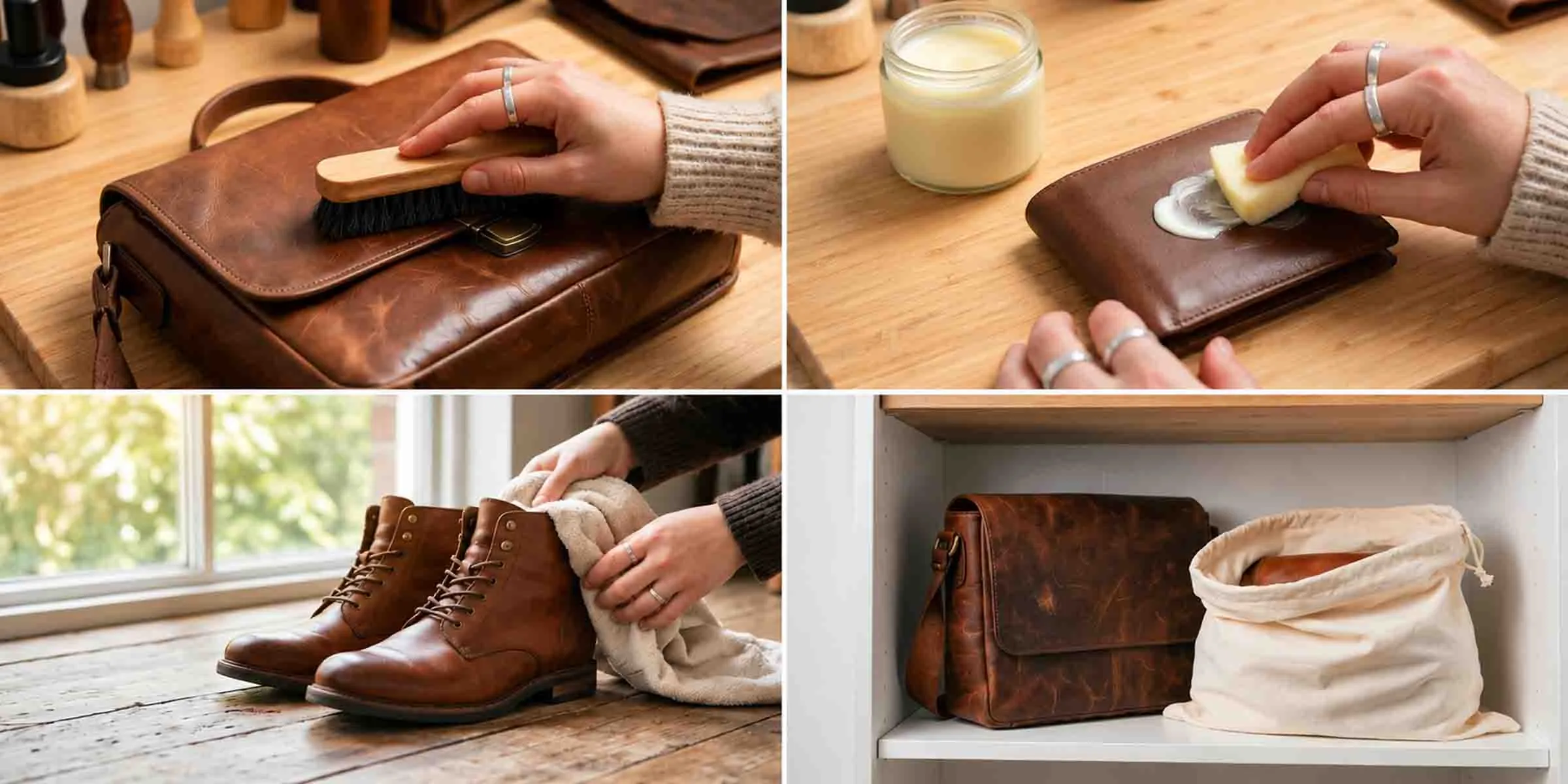
Simple Leather Care Practices
Cleaning:
By making a routine to clean your leather piece, you can increase its lifespan and appearance. Cleaning includes removing dirt and dust from the leather surface.
Conditioning:
Conditioning leather care practice includes using a high-quality conditioner once or max twice a year. Do not forget to buff the leather surface to remove excess conditioner.
Drying:
Air-dry naturally and protect the leather piece from direct exposure to sunlight, which can result in cracking.
Storage:
Store your leather piece properly in breathable cotton bags or plastic sheets to trap the moisture.
Leather Repair Related FAQs